INTERWOVEN
Spring 2026
Cedar Wood, Paracord
Pick a bird and create a habitat for their specific needs. Design for both the bird and human users.
This habitat is completely stitched and woven together using no adhesives and was designed to show continuity throughout the whole product including both form and materiality.
BIRD RESEARCH
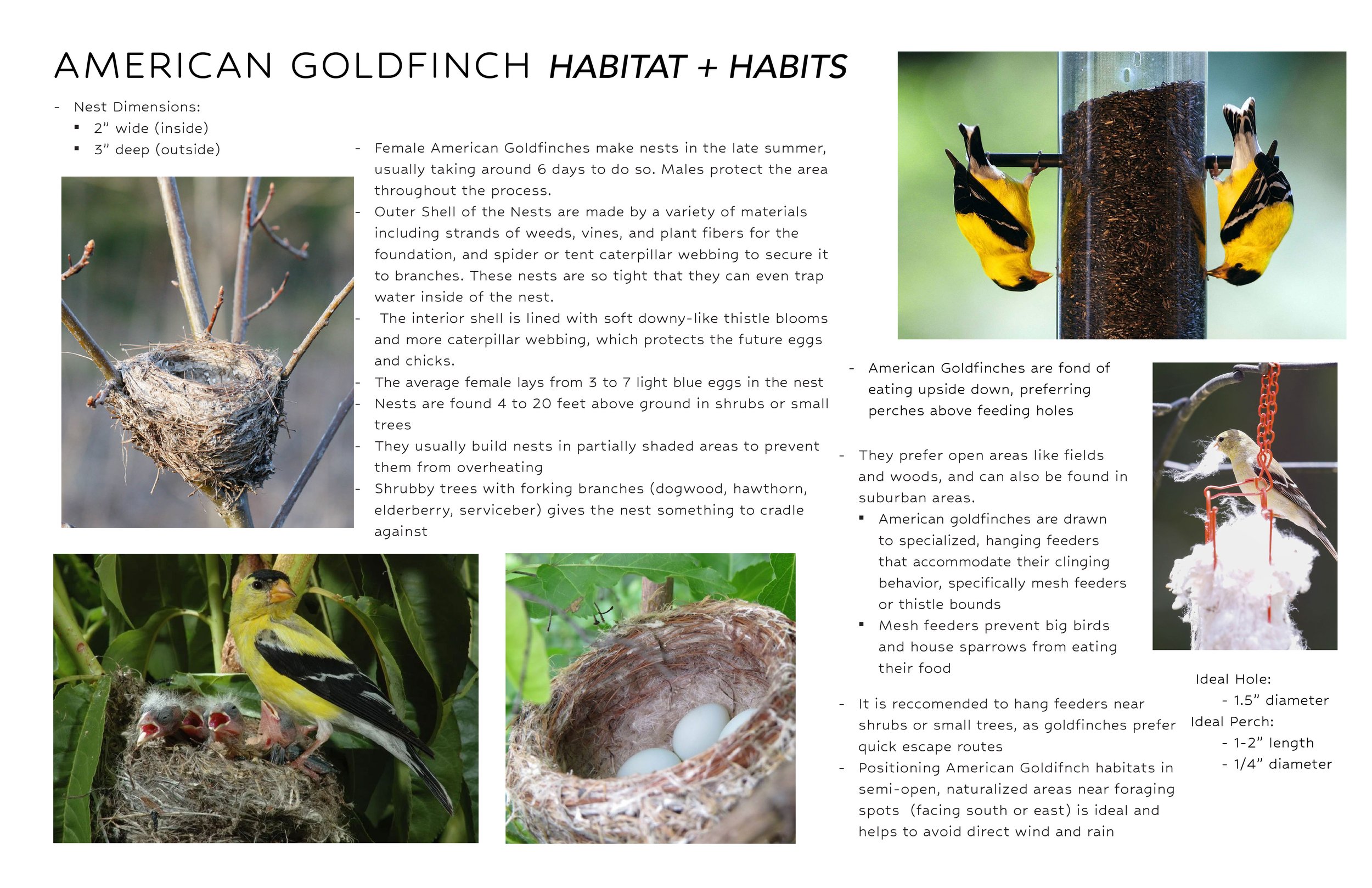
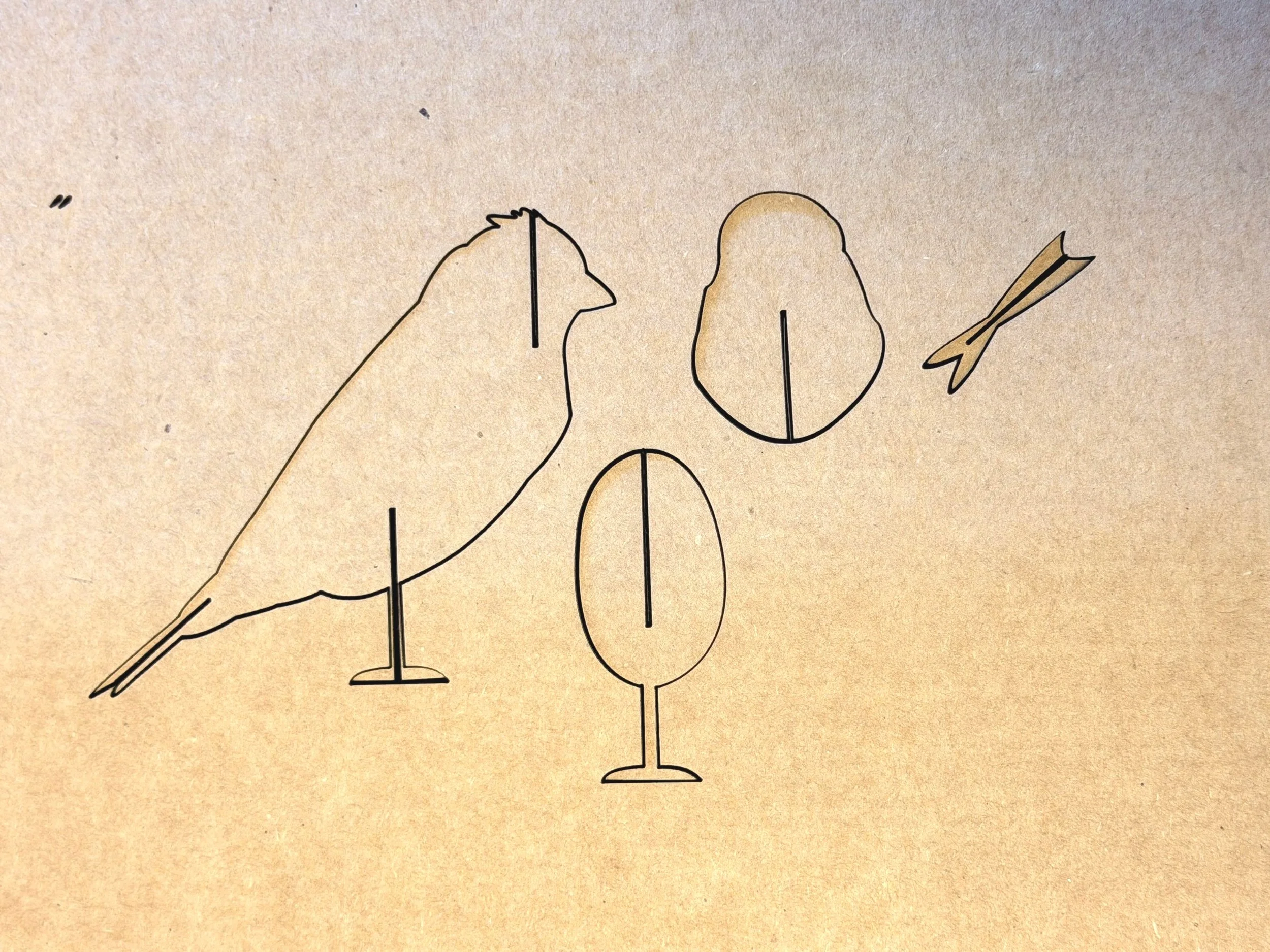
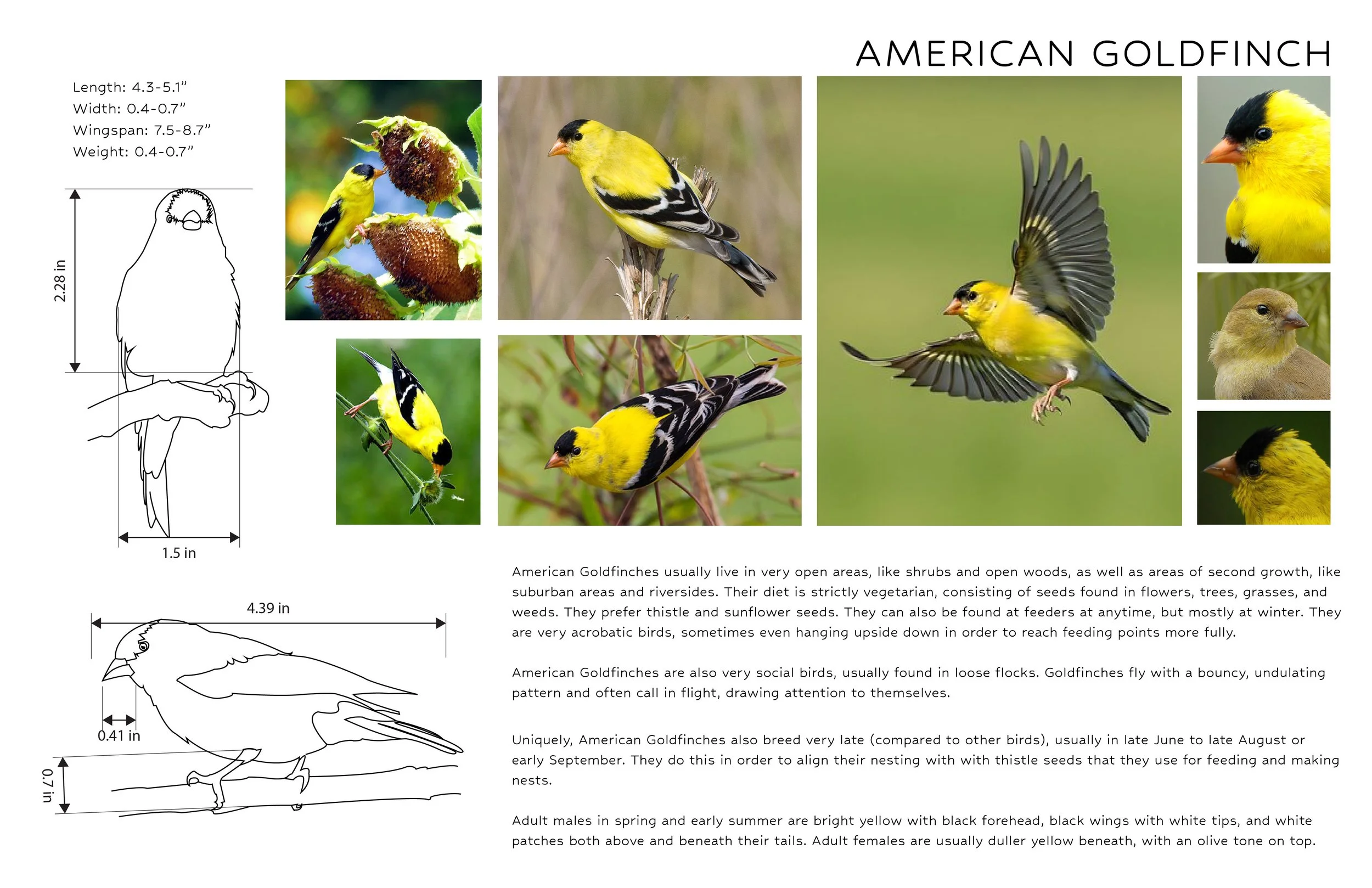
To begin the project, I chose the American Goldfinch after fixing the idea of my human user being my mother, who puts out several bird feeders every time the warm seasons come around. I researched the birds size, natural habitats, feeding, and nesting preferences in order to make Goldfinch-central design choices moving forward. Using the dimensions derived from my research, I laser cut a life sized bird that helped me understand the sizes I needed to make for my final model.
IDEATION
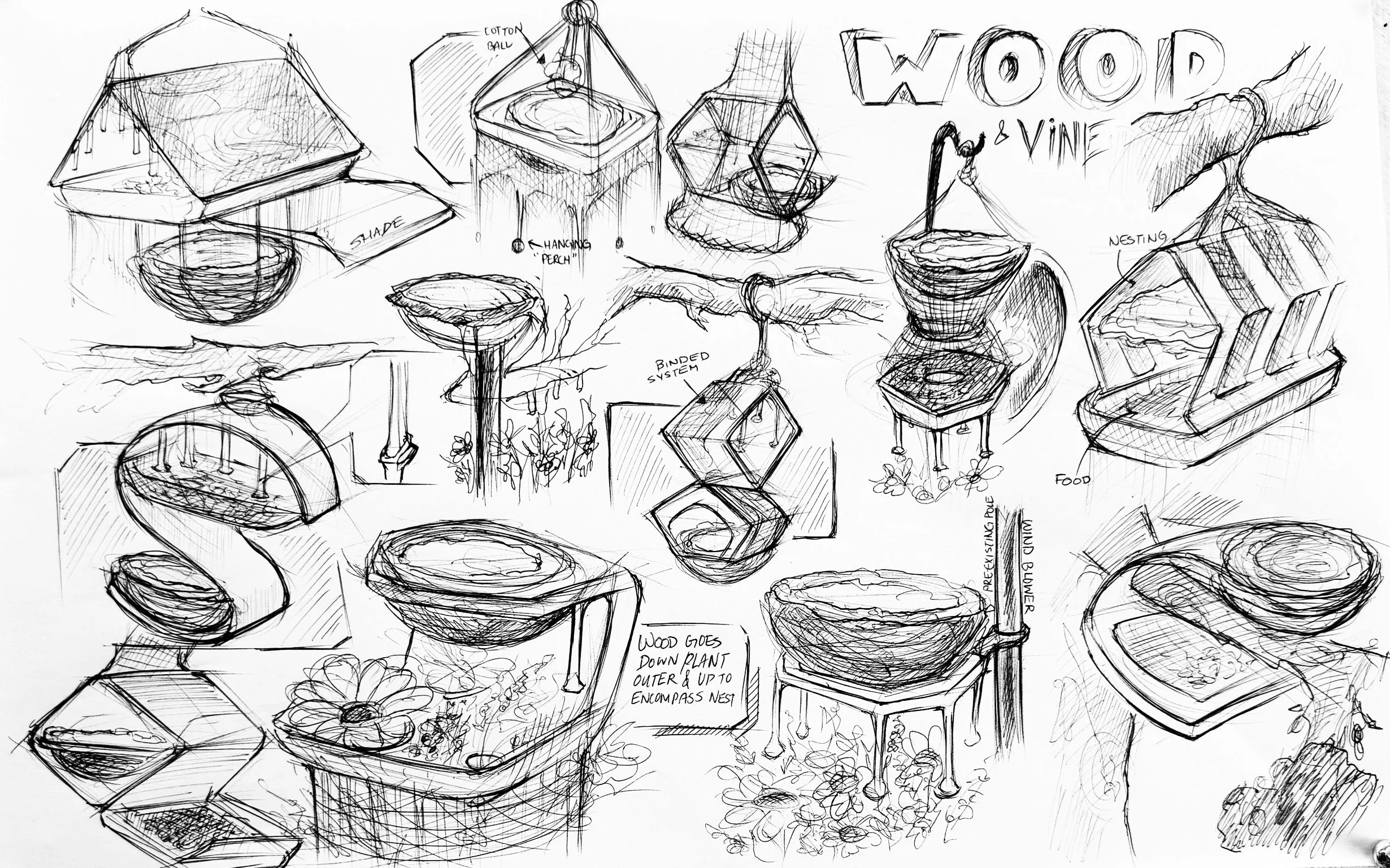
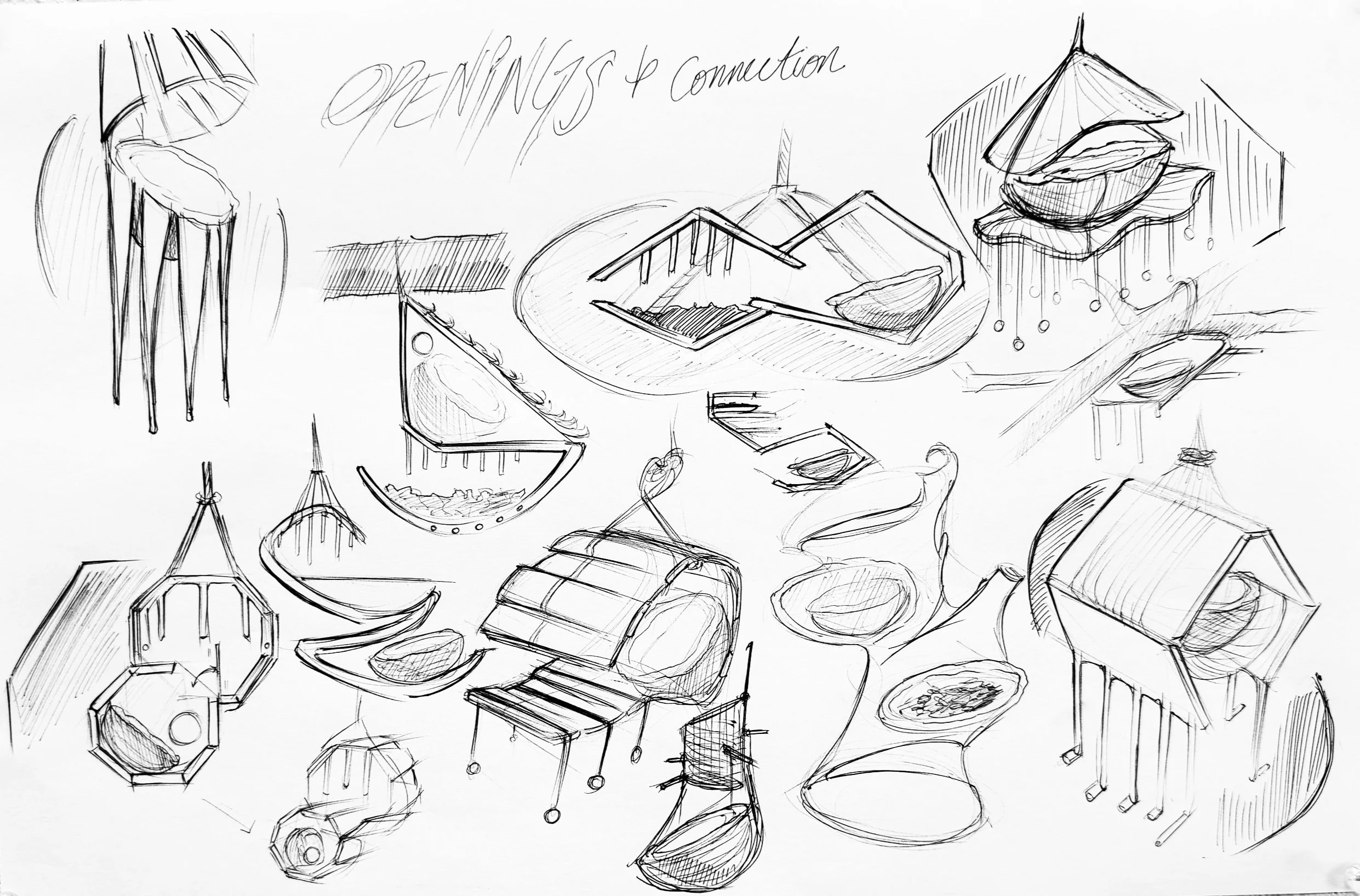
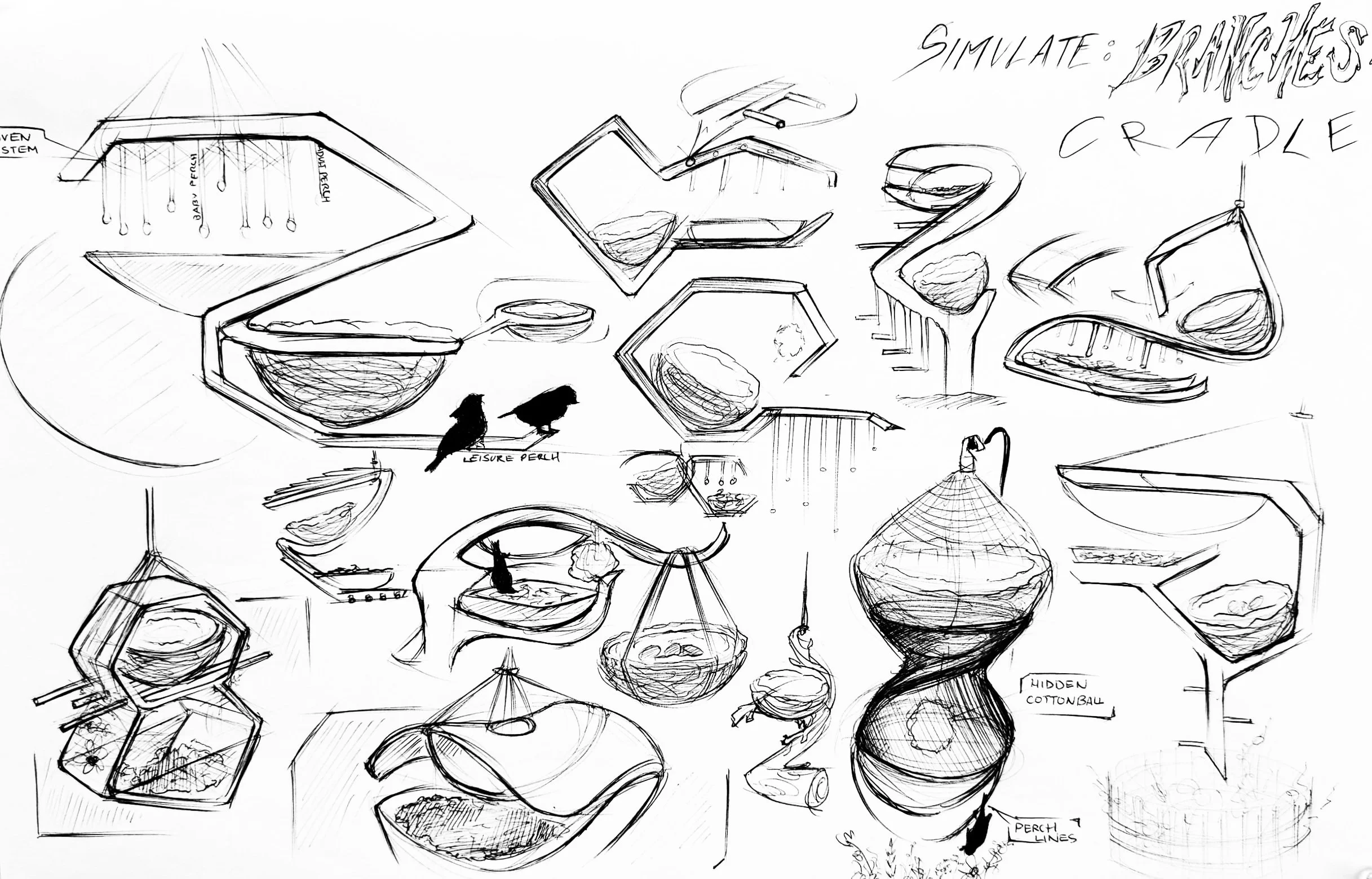
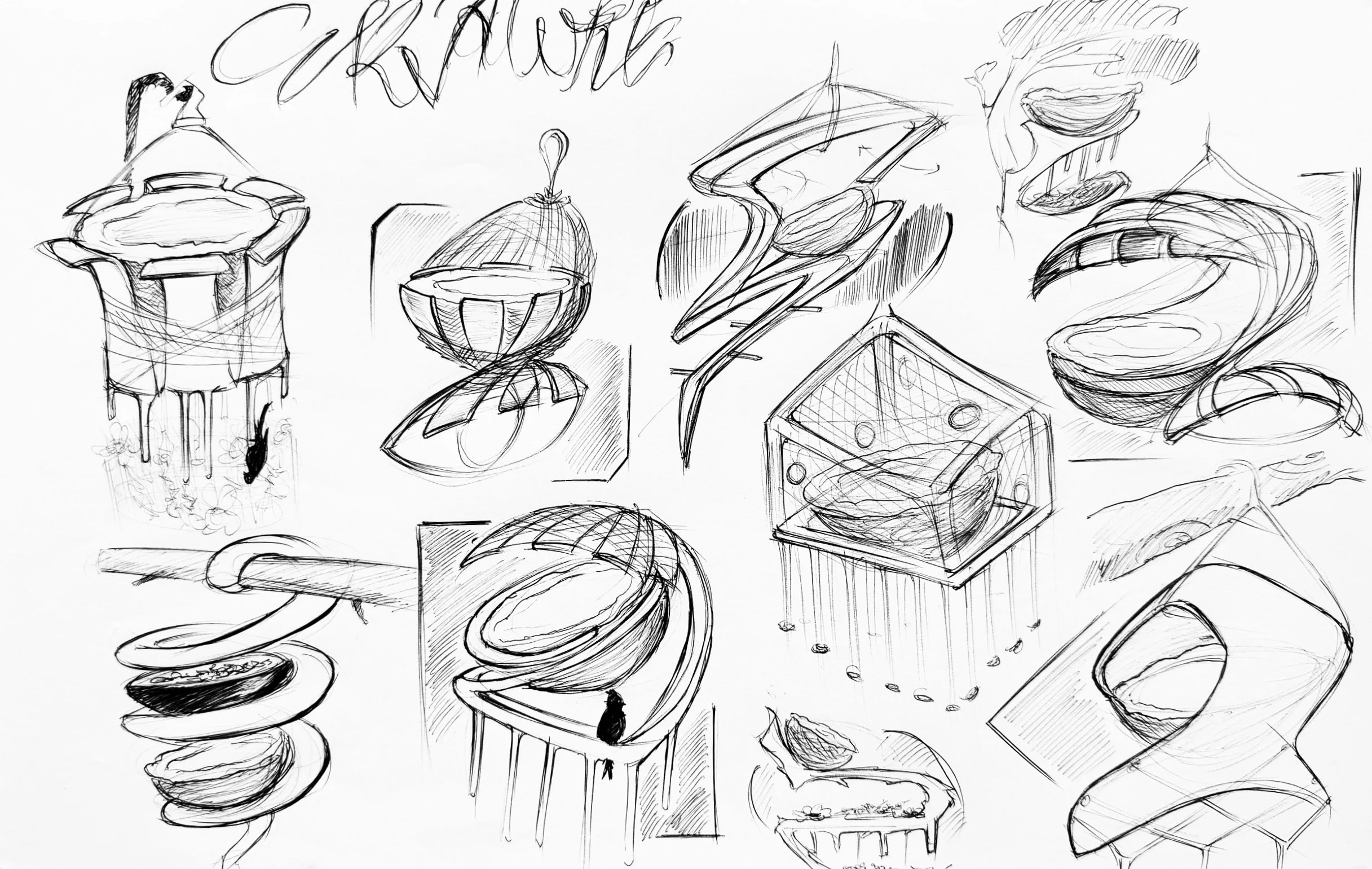
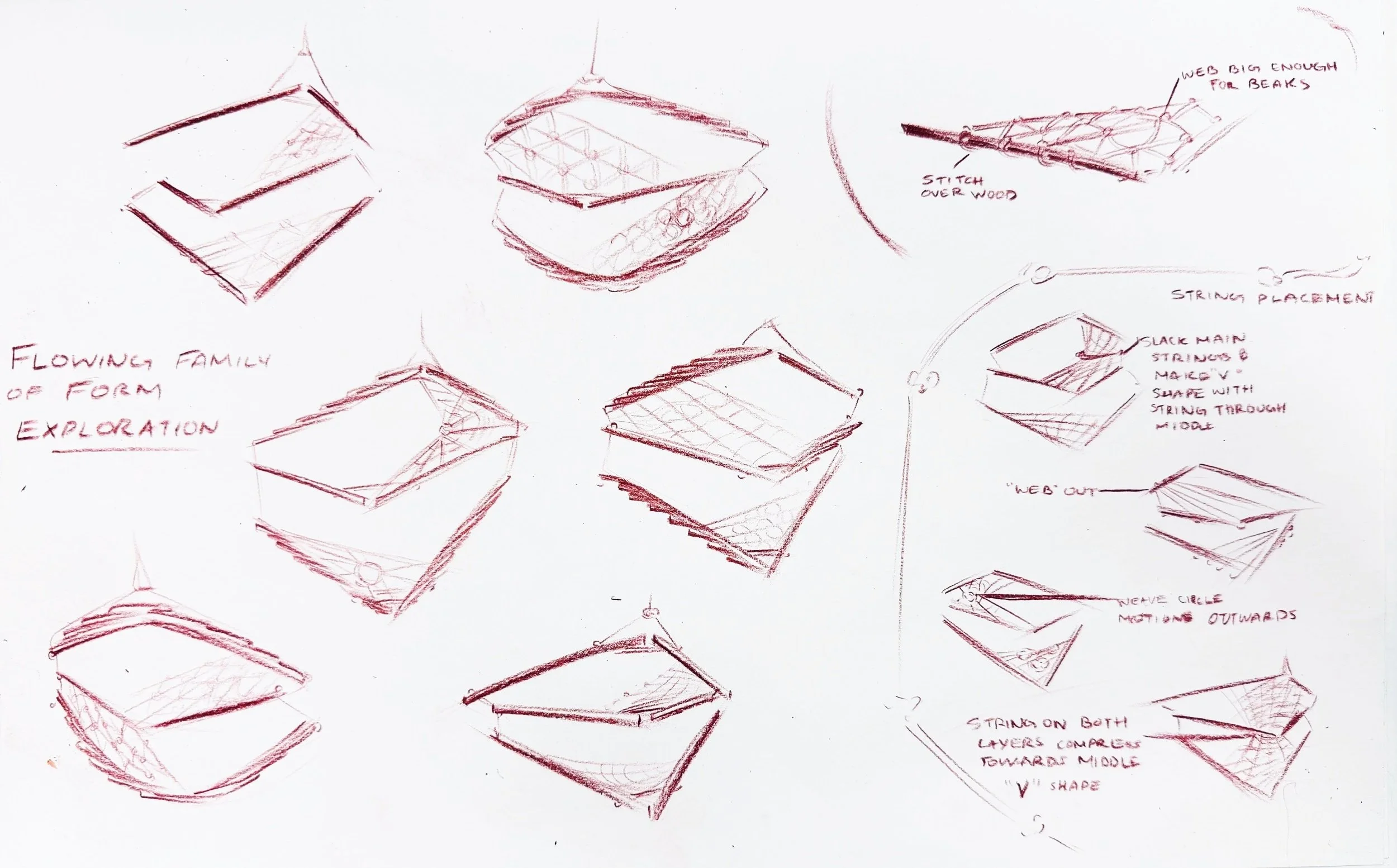
Going into the ideation process, I knew I wanted to make both a place where the bird could live and eat. Through ideation, I thought about continuity through design and making the shapes naturally flow together. I also started thinking about materials I wanted to use and how they would look in these designs.
To create a cohesive form throughout the habitat, I worked with the idea of adding the layered wood in more than one area through sketch. I also worked on finalizing the design within the nets after doing more research on how the American Goldfinch eats.
MODELS AND FORM FINALIZATION
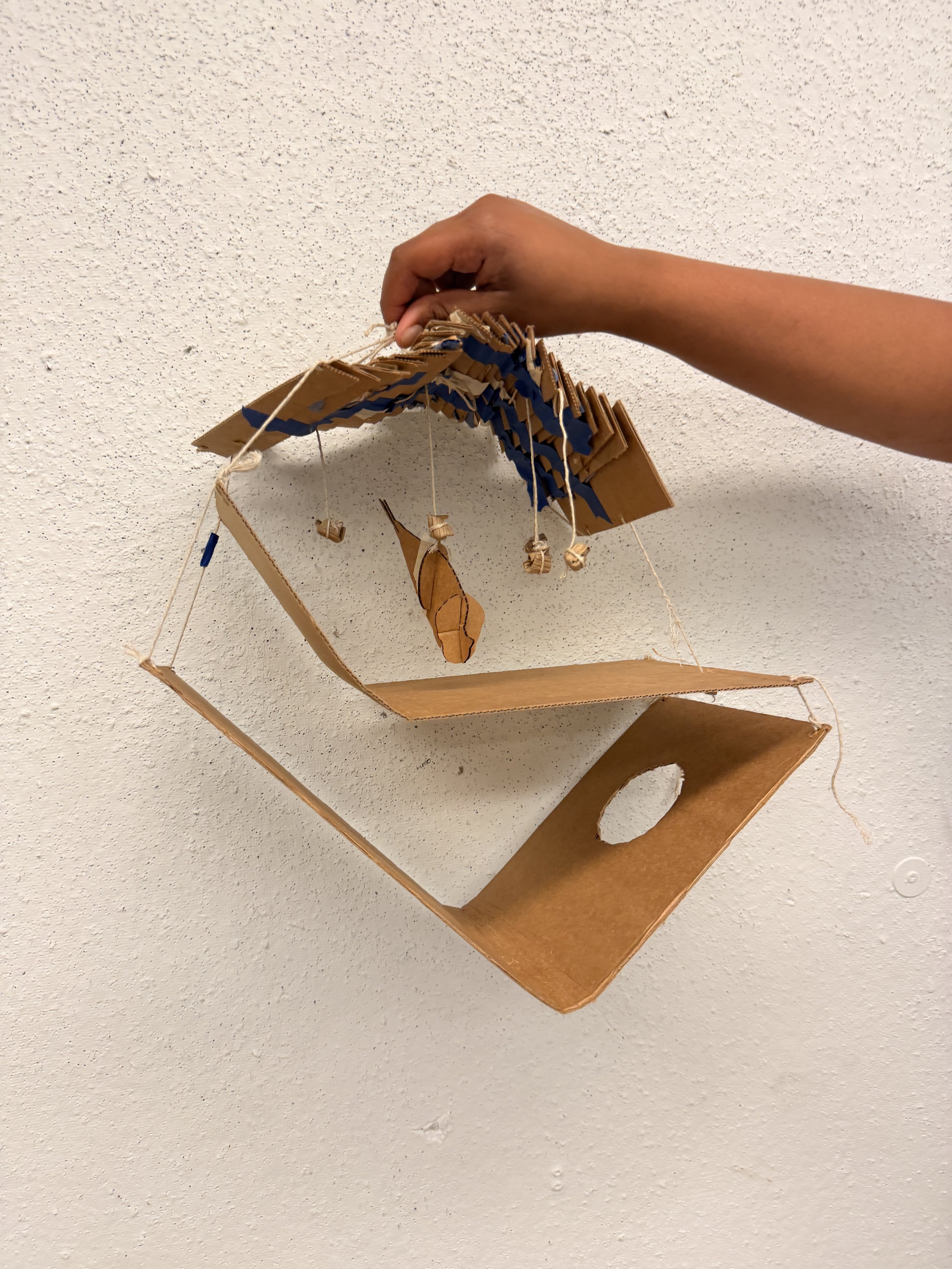
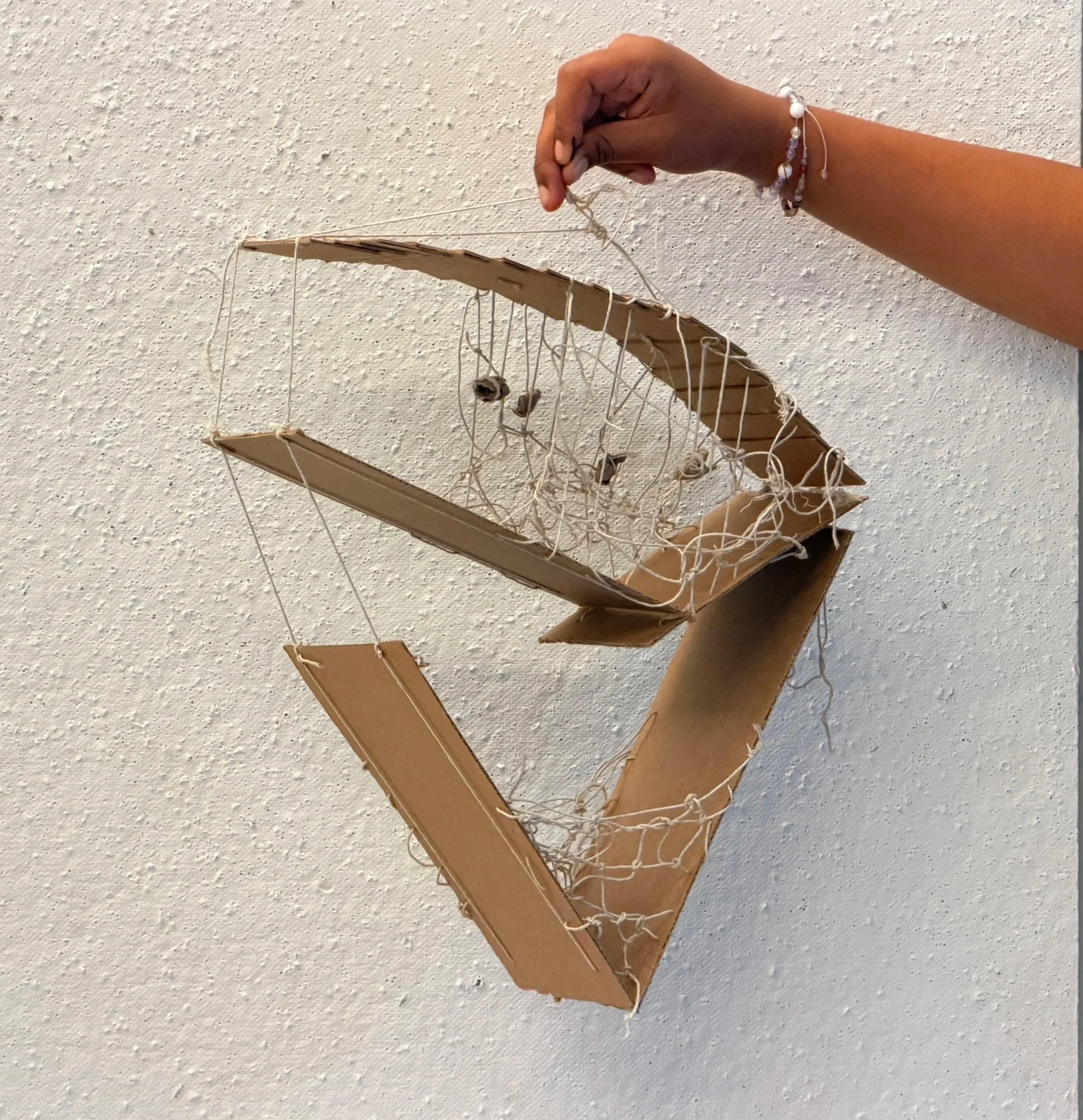
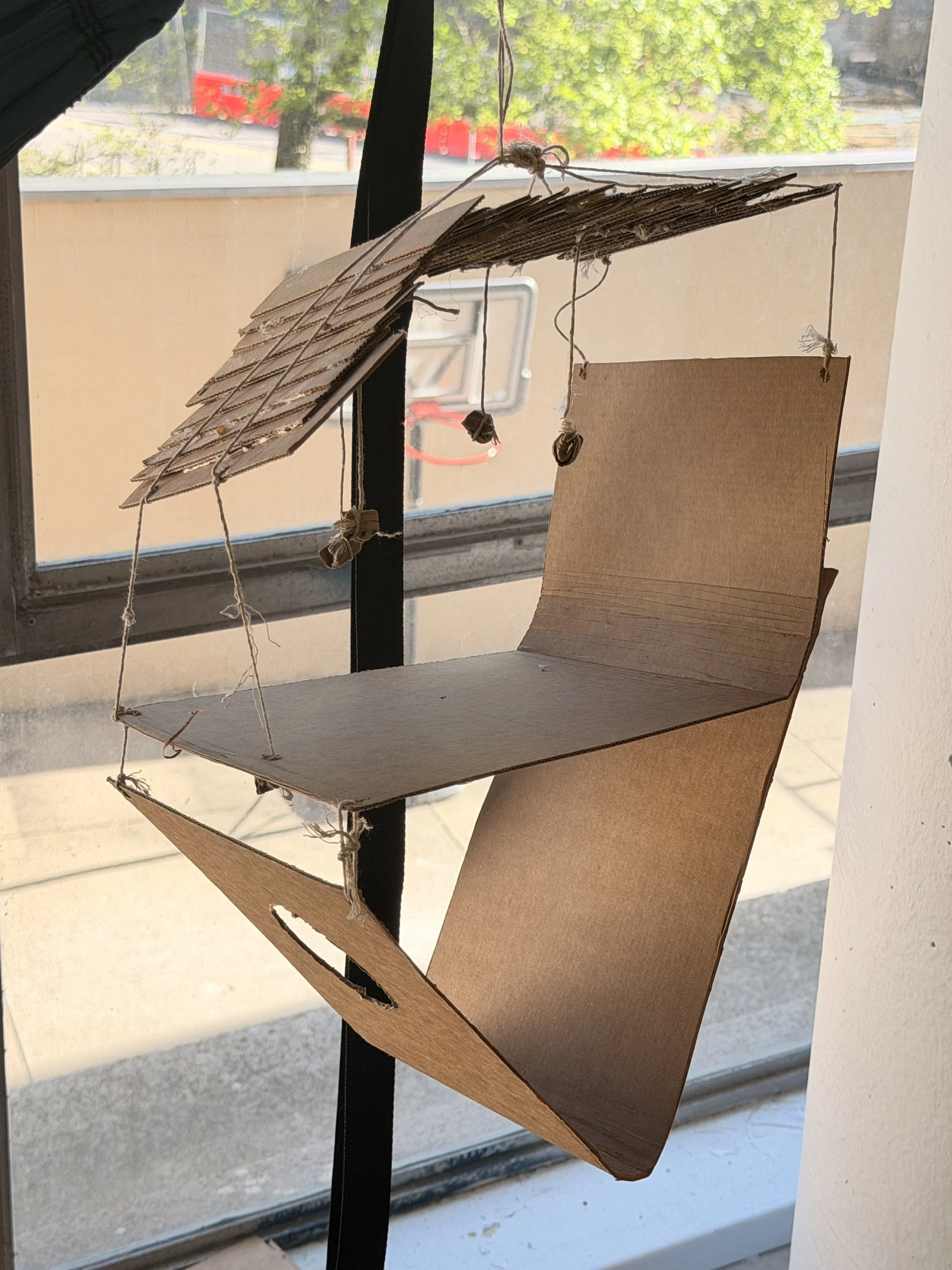
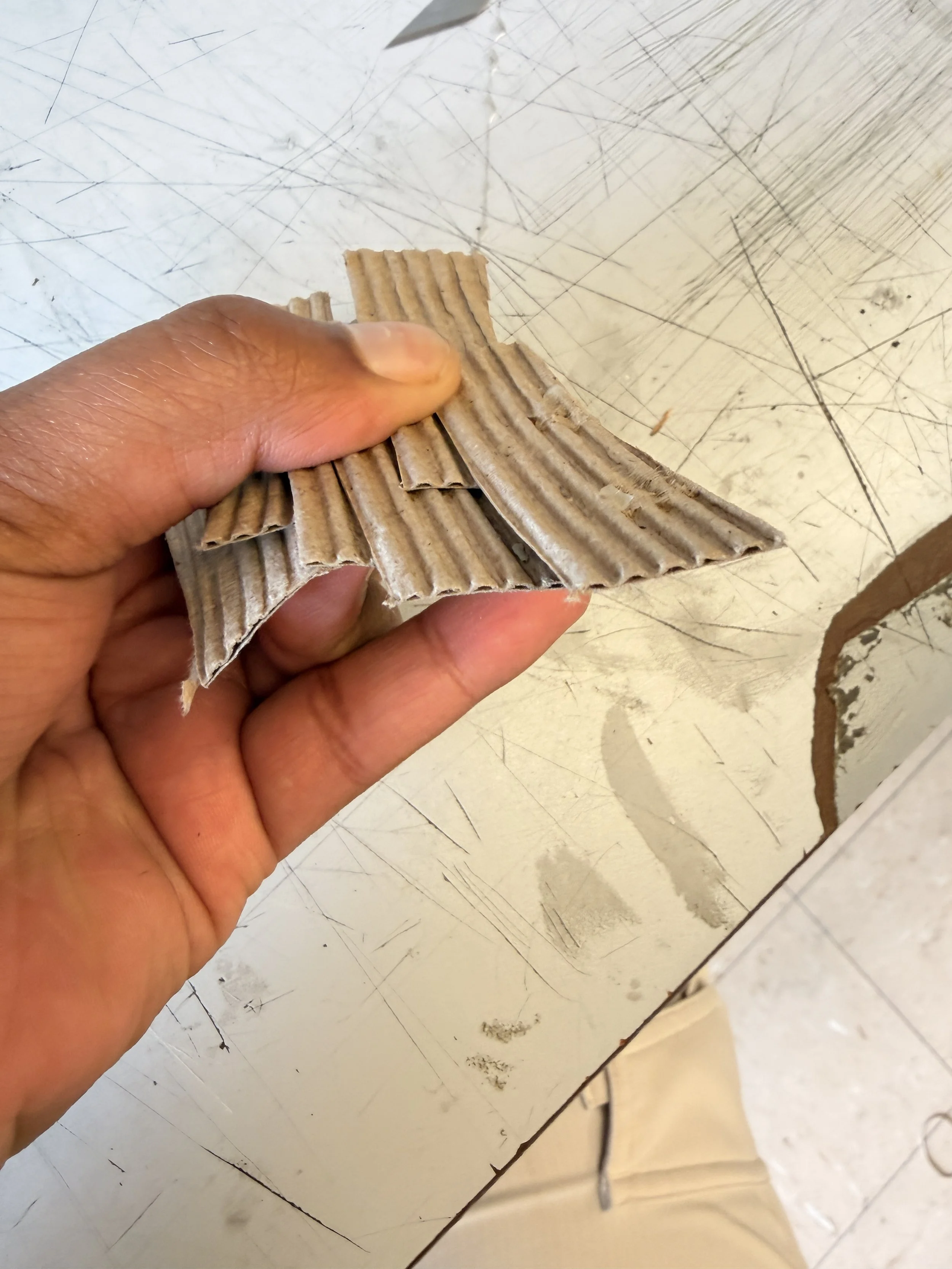
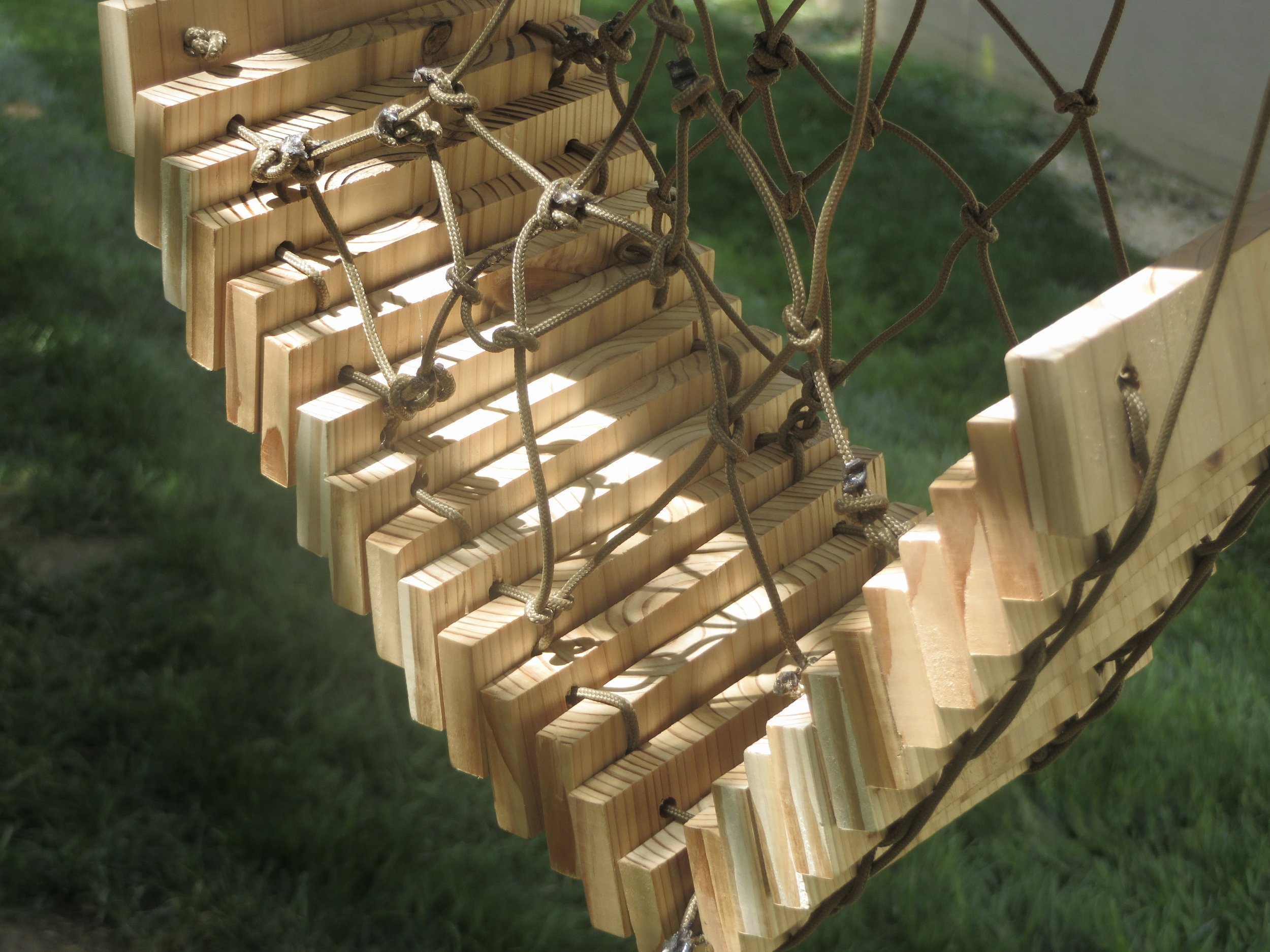
When first thinking about building the birdhouse, I was thinking of the layering of wood, and how that could be an interesting roof. In my first model, I thought to make the three levels of the habitat completely suspended by string. This stage was all about figuring out how I wanted the layering to look and the best lengths of string between stages. Moving on, I worked on defining the way the roof pieces would fall by cutting evenly sized pieces and how to layer them to get the shapes I wanted. While working through the models, I figuring out that I wanted a different piece of wood at every changing angle through the form. In the last model, I figured how to place constant tension through the string to sustain an angle. I also thought that the feeder and nest would fall out with wind, so I thought to add nets in both areas to prevent this from happening.
BUILDING AND LEARNING
Orthographic
Drawing
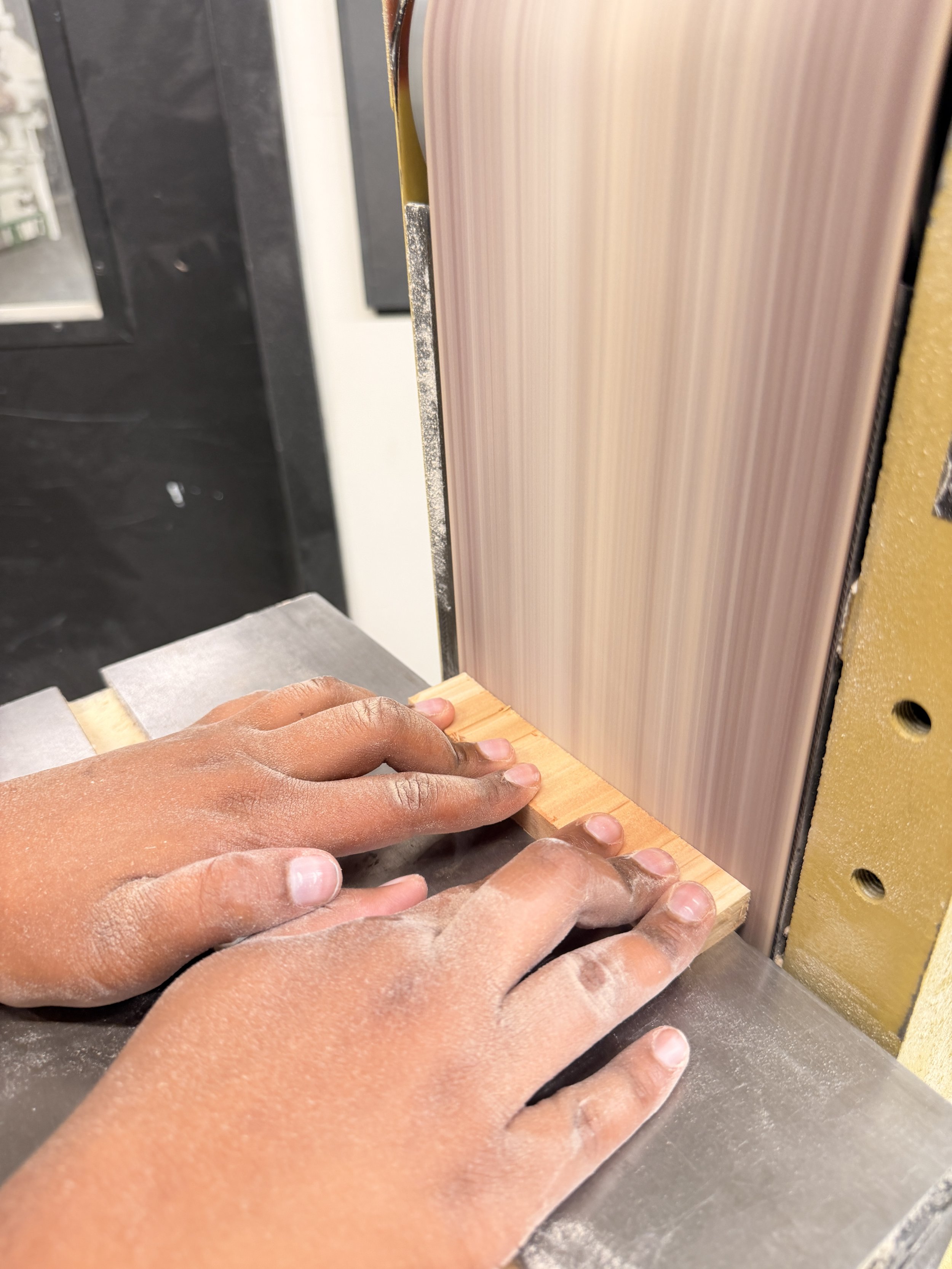
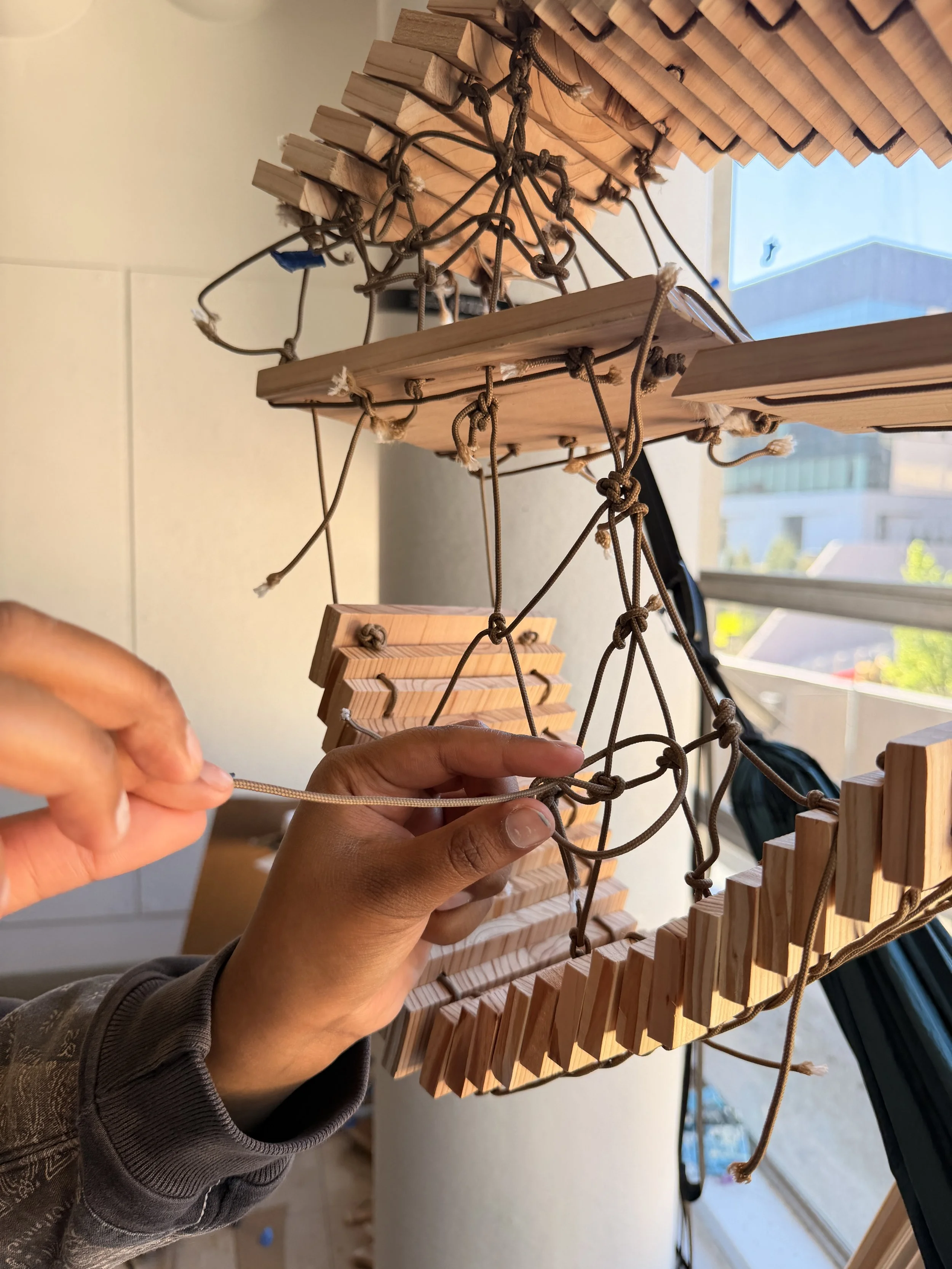
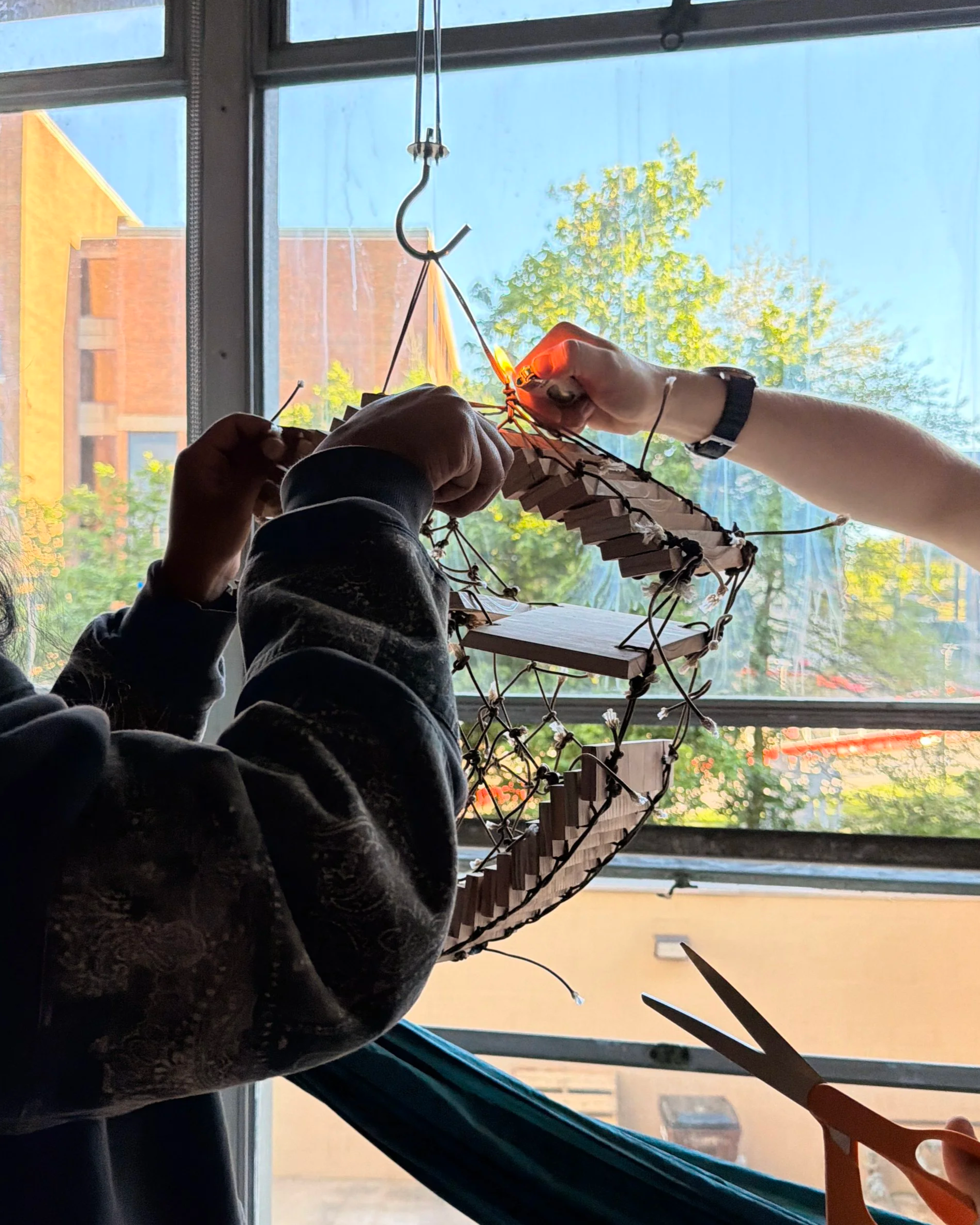
To build my habitat, I started by marking my wood with equal measurements for all of the stacked pieces and the correct measurements for the wood planks in the middle. For the string, I did some research on the most weather resistant and strong string to use to fasten all of my wood together. I found that a thin paracord would be strong enough for my whole structure but thin enough to make nots and nets. I continued the process by mapping out holes and drilling holes into each stacked piece to prepare them for stitching. After stitching the structures together, I tied the nets with attention to as much similarity I could achieve on both sides of the habitat. My last step was to cut down my ties, melt the ends, and stick them to the knot for a sturdy and neat final look.
FEATURES
·
·
COMPACT DESIGN
Engineered to be easily shippable and storable, this habitat is perfect for consumers living in areas with extreme weather conditions.
Easy to Carry
〰️
Sturdy
〰️
Secure
〰️
Dual Grain
〰️
Easy to Carry 〰️ Sturdy 〰️ Secure 〰️ Dual Grain 〰️
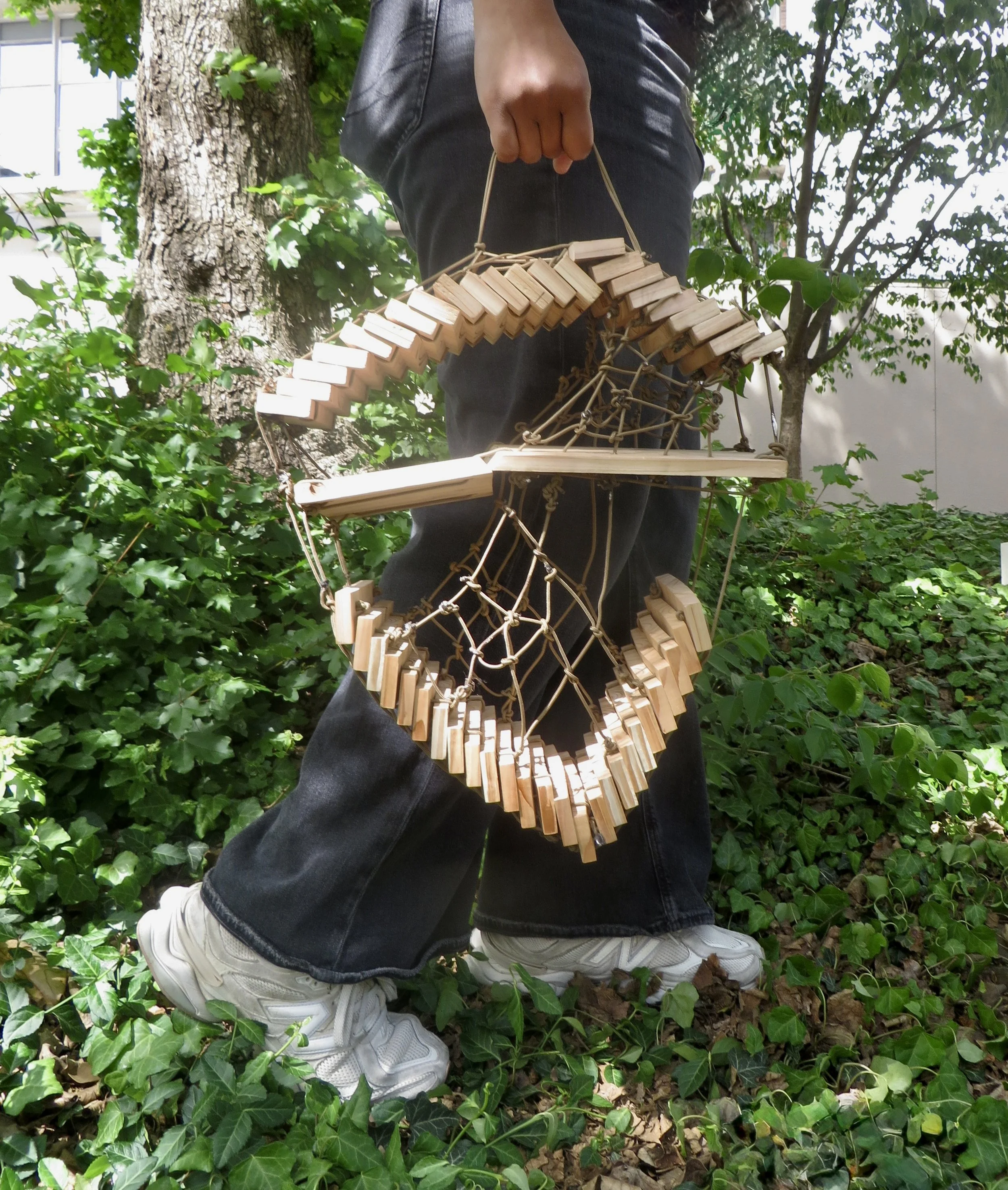
Easy to carry feature adds convenience when installing
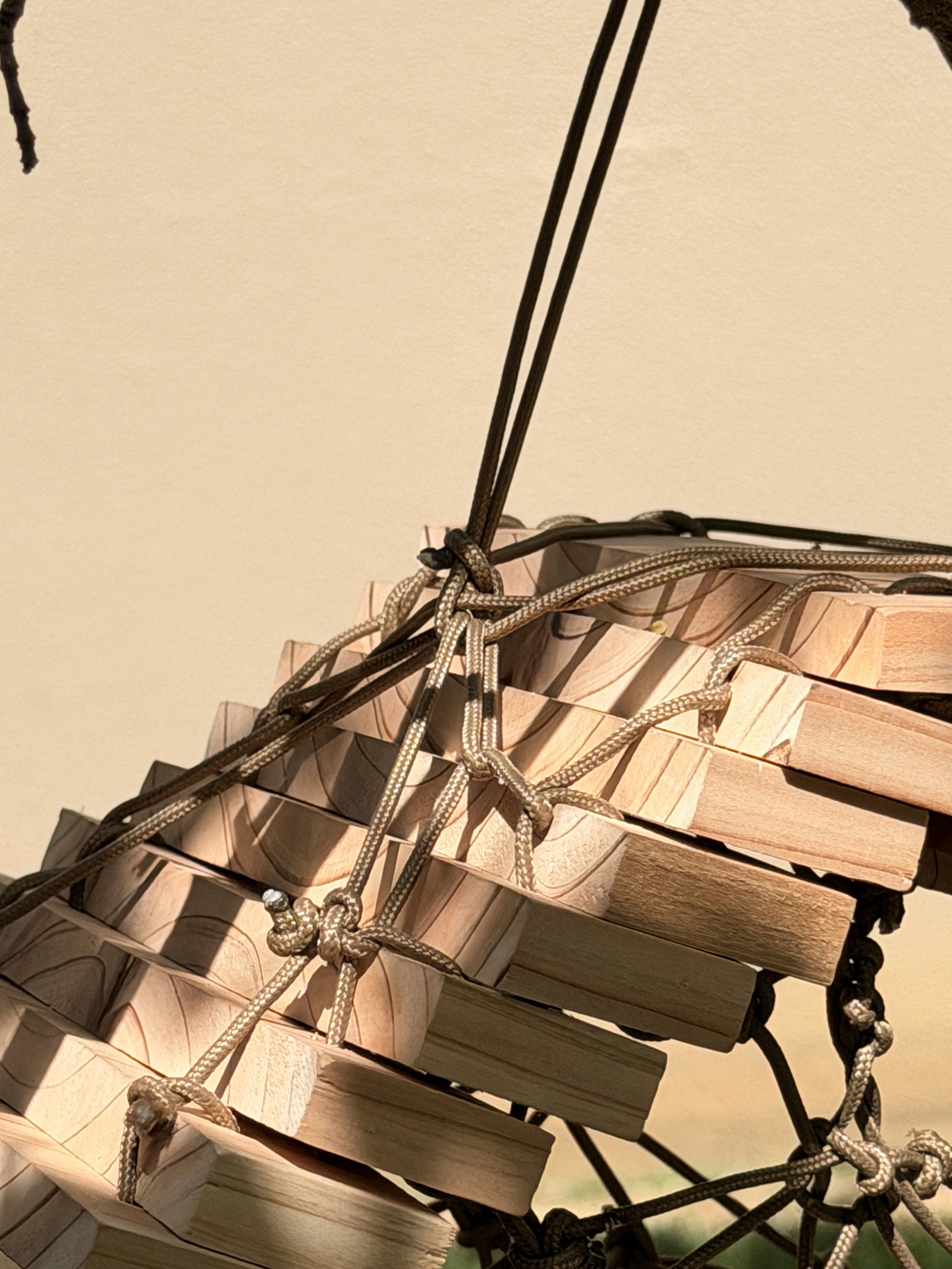
Multi-Knot Suspension ensures
stability
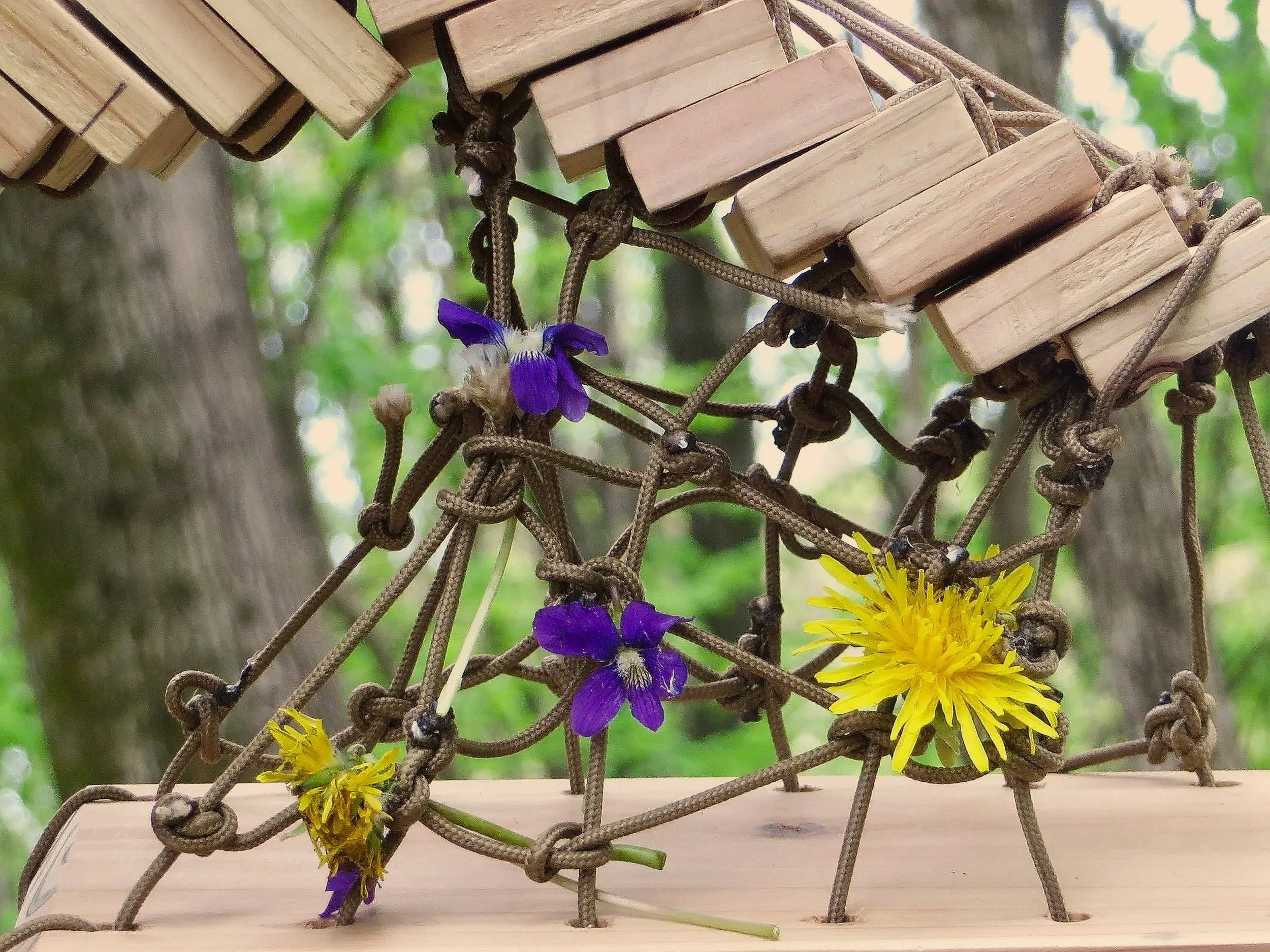
Holes in net allow for flowers
as feeding
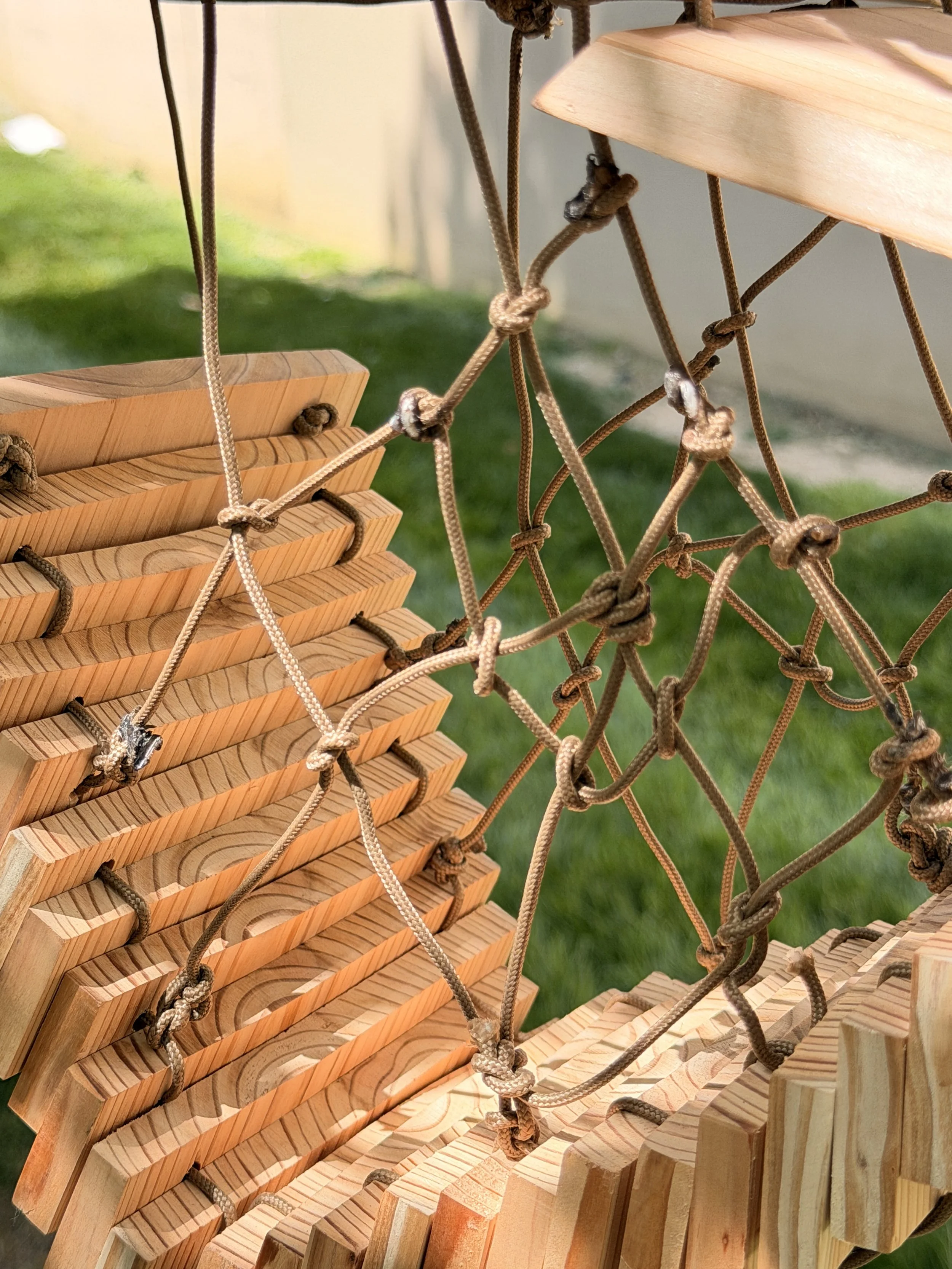
Nets allow for security
of contents of the birdhouse
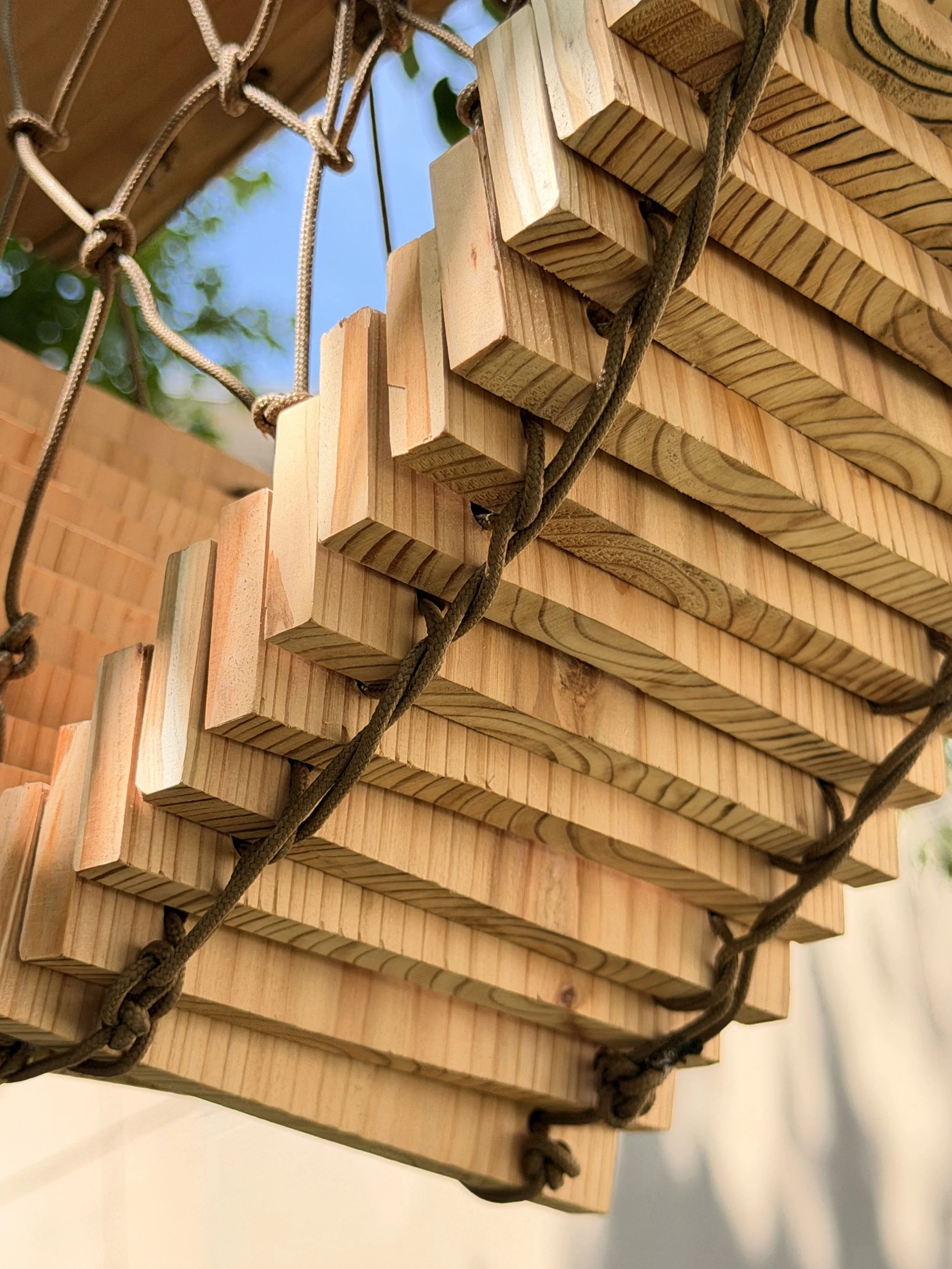
Dual Grain finish adds interest
Easy to Carry
〰️
Sturdy
〰️
Secure
〰️
Dual Grain
〰️
Easy to Carry 〰️ Sturdy 〰️ Secure 〰️ Dual Grain 〰️
FINAL
SANCTUARY
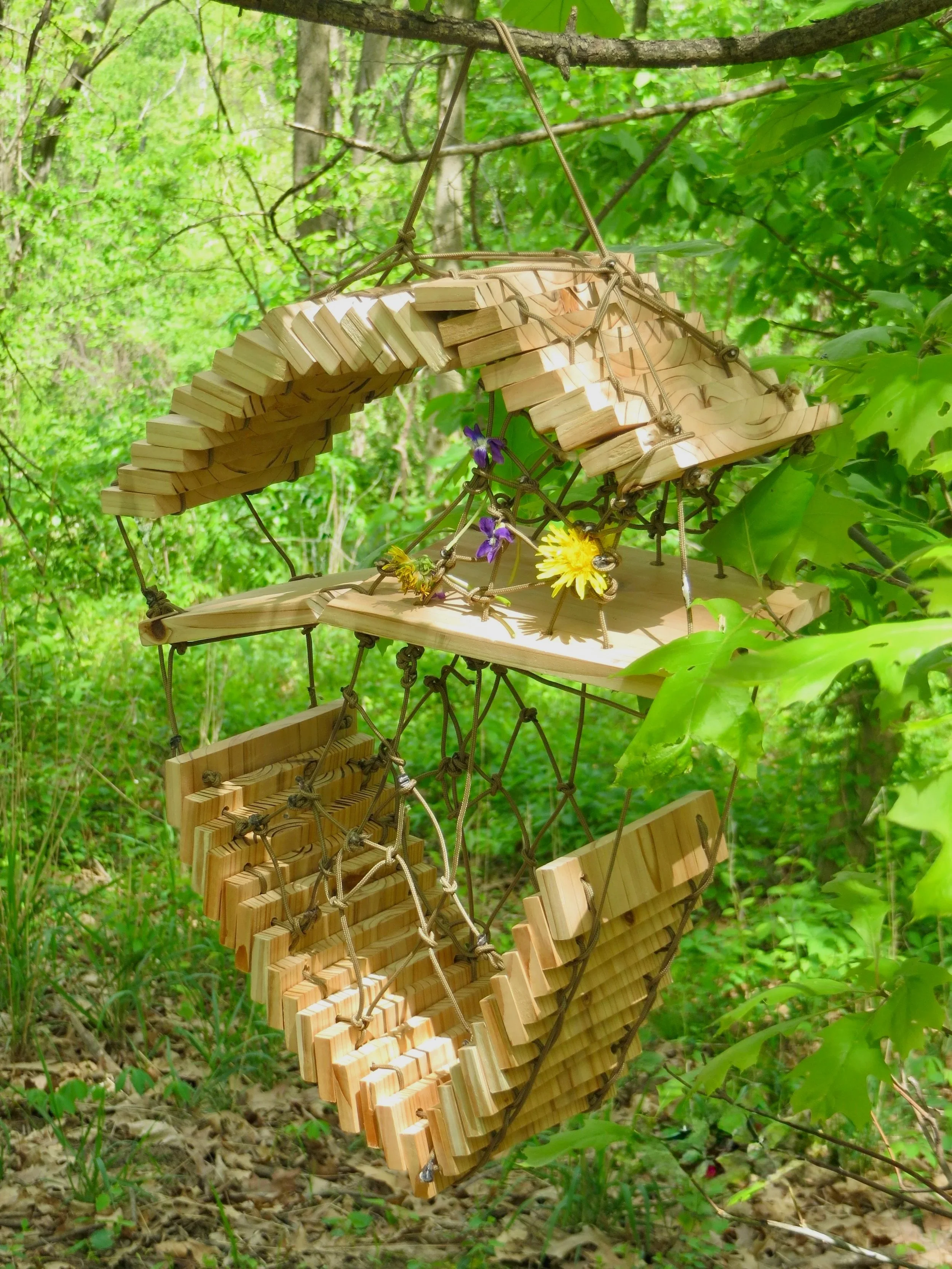
The final Avian Sanctuary can be placed in open areas like this forest. It is hung on a tree branch, but can lie on any divot in wood as well. Flowers were placed in the small holes of the model to simulate what human users could do with any fallen flowers in their yard.
The middle level is for feeding and features a two-step level so that the birds are more comfortable with their head on the same level as the feeding tray. The small holes in the nets are perfect for beaks to fit in the feeding platform.
The bottom level was designed to replicate the natural cradling of a branch that American Goldfinches prefer to build their nests in. The bigger holes in the nests perfectly fit the size of the bird in order for them to fly in and out the area with comfort.